
In a DNP3-based SCADA system, system topology refers to the physical and logical arrangement of how master stations, outstations, and communication devices are connected and interact.
Designed for flexibility and reliability, DNP3 supports multiple network configurations that can be tailored to the system size, communication medium, and redundancy requirements.
The most common DNP3 topologies include master–slave, multidrop, hierarchical, and multiple-master systems.
Table of Contents
Master–Slave Topology
The master–slave (or point-to-point) topology is the simplest form of DNP3 communication.
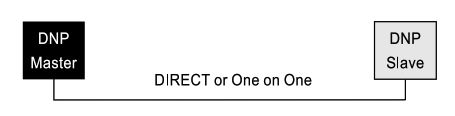
In this arrangement, a single master station communicates directly with an outstation (Slave).
The master initiates all communication by issuing requests for data or control operations, while the outstation responds when addressed or sends unsolicited messages when significant events occur.
Multidrop Topology
The multidrop topology extends the point-to-point topology concept by allowing a single master to communicate with multiple slaves over a shared communication channel.
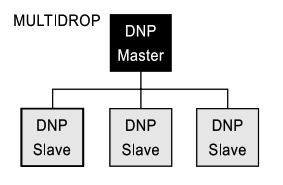
Each outstation is assigned a unique address, enabling the master to poll them sequentially.
This setup is common in serial bus, radio, or fiber systems where physical cabling or bandwidth is constrained.
For example, in a water distribution network, a single master might sequentially poll multiple remote pumping stations connected along the same line.
Hierarchical Topology with Data Concentrators
In large or geographically distributed SCADA systems, it’s not practical for the main control center (Master) to communicate with every outstation (Slave) directly.
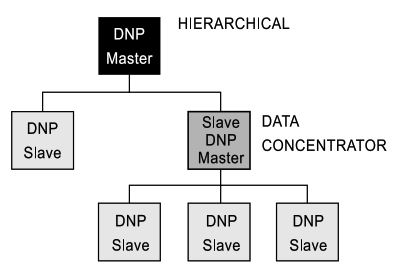
Instead, hierarchical topologies are used — incorporating data concentrators or sub-masters between the main master and field devices.
A data concentrator collects data from several nearby outstations, aggregates it, and forwards summarized information to the main control center.
This reduces communication traffic, enhances scalability, and improves response time.
For instance, a regional substation may act as a data concentrator for multiple feeders or local RTUs, passing only essential information upstream to the master.
This model is common in large electric utilities, pipeline systems, and transportation control networks.
Multiple-Master Topology
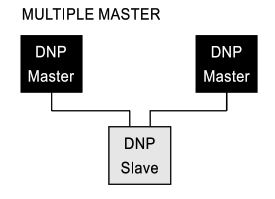
A multiple-master topology allows more than one master station to access the same set of outstations.
This setup supports redundant control centers or hot-standby SCADA configuration, ensuring that if one master fails, another can continue operation without disrupting communication.
For example, a power grid might have both a primary control center and a backup operations center communicating with the same field devices.
DNP3’s layered architecture and addressing scheme make this possible without data collisions, as each master identifies itself uniquely within the network.
Multiple-master systems enhance resilience, availability, and situational awareness, especially in mission-critical operations where uptime is vital.
Peer-to-Peer and Event-Driven Communication
Although DNP3 traditionally uses a master–slave model, it also supports peer-to-peer communication and unsolicited reporting.
In these modes, an outstation can send messages or event data to a master without being polled, known as report by exception.
This capability reduces bandwidth usage, speeds up response to critical events (such as faults or alarms), and allows more autonomous behavior in distributed systems.
Even in these configurations, periodic polling by the master remains important to confirm link integrity and ensure no data was missed.
Conclusion : Why DNP3’s Topology Flexibility Matters
DNP3’s support for diverse network topologies is one of its key strengths.
Whether used in a simple point-to-point link or a large multi-level hierarchy, the protocol maintains consistent message structure, addressing, and reliability mechanisms.
This flexibility allows DNP3 to be applied across a wide range of industries — from small local automation systems to nationwide utility networks — while maintaining interoperability between equipment from different manufacturers.
By choosing the right topology for each part of a system, operators can balance performance, cost, scalability, and redundancy, ensuring that communication remains efficient and reliable under all operating conditions.