
A Distribution Management System (DMS) is a software platform used by electric utilities to monitor, control, analyze, and optimize distribution networks. These networks typically operate at medium voltage (MV) and low voltage (LV) levels and deliver electricity from substations to end customers.
In simple terms, a DMS helps utilities operate the distribution grid safely, reliably, and efficiently in real time.
Unlike transmission systems, distribution networks are radial, highly branched, and directly affected by customer behavior, weather, and distributed energy resources. This complexity makes DMS a critical system for modern power utilities.
Table of Contents
Why Is a Distribution Management System Important?
Distribution networks face increasing operational challenges, such as:
- Growing electricity demand
- Integration of rooftop solar and distributed generation
- Electric vehicle charging loads
- Voltage fluctuations and power quality issues
- Faster outage restoration expectations
A Distribution Management System helps utilities:
- Detect and respond to faults quickly
- Reduce outage duration
- Improve voltage control
- Optimize network performance
- Support automation and smart grid initiatives
Without a DMS, operators rely heavily on manual switching, experience-based decisions, and limited visibility.
Core Functions of a Distribution Management System
1. Real-Time Network Monitoring
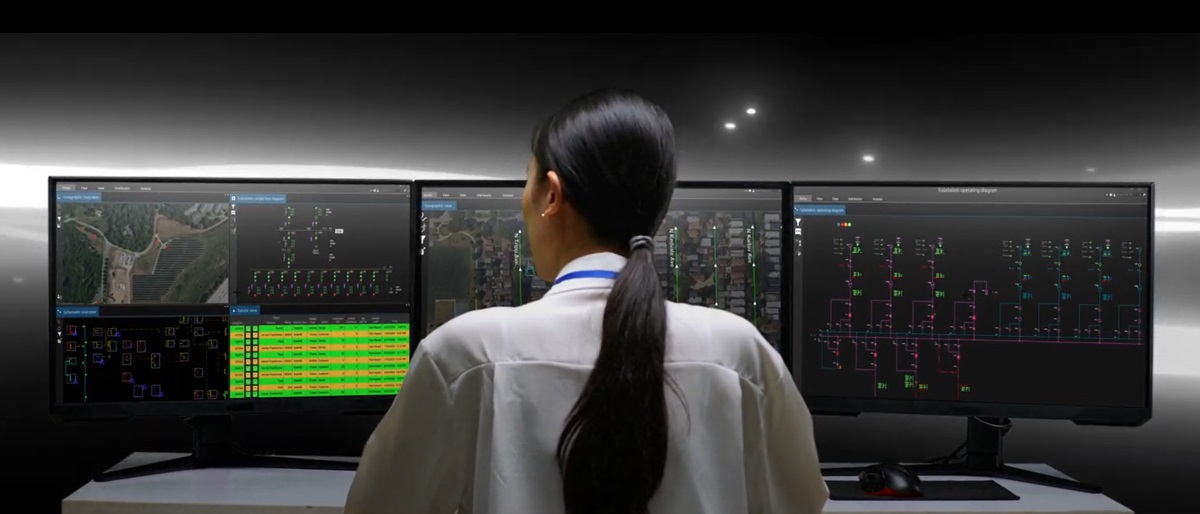
DMS provides operators with a real-time view of the distribution network, including:
- Feeder status
- Switch and breaker positions
- Voltage and current measurements
- Alarms and abnormal conditions
This real-time visibility is the foundation of all DMS applications.
2. Fault Detection, Isolation, and Restoration (FDIR)
FDIR is one of the most valuable DMS functions.
When a fault occurs, the DMS:
- Detects the fault location
- Identifies the affected network section
- Isolates the faulted area
- Restores power to healthy sections automatically or semi-automatically
FDIR significantly reduces outage duration and customer impact.
3. Voltage and Reactive Power Optimization (VVO / Volt-VAR Control)
The DMS continuously manages voltage levels by controlling:
- Capacitor banks
- Voltage regulators
- On-load tap changers
The objective is to:
- Maintain voltage within statutory limits
- Reduce technical losses
- Improve power quality
Volt-VAR optimization also supports energy efficiency and conservation programs.
4. Load Flow and Feeder Analysis
DMS performs distribution load flow analysis to:
- Detect overloads
- Balance feeder loads
- Identify voltage violations
- Support switching decisions
This helps utilities operate closer to system limits while maintaining safety.
5. Switching Management and Safety Analysis
DMS supports both planned and unplanned switching operations by:
- Simulating switching steps
- Checking interlocks and safety rules
- Preventing unsafe or incorrect operations
This reduces operator error and improves control room safety.
Distribution Management System Architecture
A typical DMS architecture includes:
- Real-Time Database – Stores live operational data
- Network Model – Digital representation of feeders, switches, transformers, and loads
- Application Layer – FDIR, VVO, load flow, switching analysis
- Human-Machine Interface (HMI) – Operator dashboards and network diagrams
- Integration Layer – Interfaces with external systems
The accuracy of the network model is critical for DMS performance.
DMS vs SCADA: What Is the Difference?
- SCADA provides real-time monitoring and basic control
- DMS uses SCADA data and adds intelligence, analytics, and automation
In simple terms:
SCADA tells you what is happening. DMS tells you what to do about it.
Modern utilities use DMS on top of SCADA.
DMS Integration with Other Utility Systems
DMS and OMS (Outage Management System)
- OMS focuses on customer outages and restoration tracking
- DMS focuses on electrical network operation
Integrated DMS-OMS systems provide faster and more accurate outage management.
DMS and AMI (Advanced Metering Infrastructure)
Smart meter data is used by DMS for:
- Load estimation
- Outage detection
- Voltage monitoring
- Power quality analysis
AMI enhances DMS accuracy and situational awareness.
Role of CIM and IEC 61968 Standards in DMS
Modern DMS platforms must exchange data with many systems, including:
- SCADA
- OMS
- AMI
- GIS
- Asset management systems
- Customer information systems
The Common Information Model (CIM) provides a standard data model for representing distribution network components such as lines, transformers, switches, meters, and customers.
The IEC 61968 standard defines:
- System interfaces for distribution management
- Data exchange rules between applications
- CIM extensions specific to distribution networks
Using IEC 61968 enables:
- Interoperability between systems
- Easier integration
- Reduced vendor lock-in
- Consistent data modeling across the utility
Practical Use of DMS in Daily Utility Operations
In real-world control rooms, DMS is used to:
- Restore supply during storms and faults
- Perform safe maintenance switching
- Manage peak load conditions
- Analyze voltage complaints
- Support operator decision-making
DMS acts as the operational brain of the distribution grid.
Benefits of a Distribution Management System
Key benefits include:
- Faster outage restoration
- Improved system reliability
- Better voltage regulation
- Reduced technical losses
- Improved asset utilization
- Enhanced operator confidence
A modern DMS is essential for smart grid development.
Challenges in DMS Implementation
Common challenges include:
- Accurate and complete network modeling
- Integration with legacy systems
- Data quality from field devices
- Operator training and change management
Successful DMS deployment requires technology, process, and people alignment.
Future of Distribution Management Systems
The future of DMS is driven by:
- Distributed Energy Resources (DER)
- Electric vehicles
- Battery energy storage systems
- Advanced automation and AI
Future DMS platforms will be:
- More automated
- More predictive
- More data-driven
- Closely integrated with DERMS and advanced analytics
FAQ – Distribution Management System (DMS)
What is a Distribution Management System (DMS)?
A Distribution Management System (DMS) is a software platform used by utilities to monitor, control, and optimize medium-voltage and low-voltage distribution networks.
What is the main purpose of DMS?
The main purpose of DMS is to improve reliability, reduce outages, enhance voltage control, and optimize daily operation of distribution networks.
What is the difference between DMS and SCADA?
SCADA provides real-time monitoring and control, while DMS builds on SCADA data and adds intelligence, automation, and advanced analytics for distribution networks.
How is DMS different from EMS?
EMS focuses on generation and transmission, while DMS focuses on distribution networks closer to end customers. Both systems often work together in modern utilities.
What is FDIR in DMS?
FDIR stands for Fault Detection, Isolation, and Restoration. It automatically identifies faults, isolates the affected section, and restores power to healthy areas to reduce outage time.
Conclusion
A Distribution Management System (DMS) is a core utility system that enables safe, reliable, and efficient operation of power distribution networks.
By combining real-time monitoring, intelligent applications, and standardized data models, DMS helps utilities meet today’s operational challenges and prepare for the future of the electric grid.